The Viking War Hammer: History, Design & Legacy of the Norse Battle Hammer
Introduction
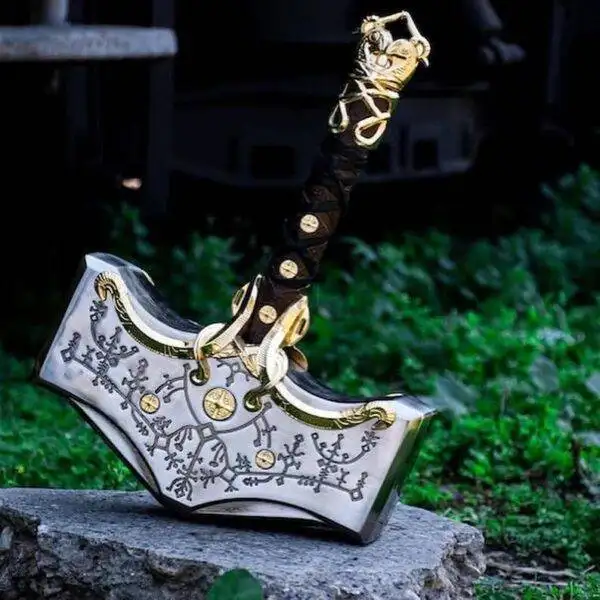
When most people think of Viking weapons, the axe or sword comes to mind first. But among Norse warriors, the war hammer held a place of unique honor — equal parts devastating battlefield tool and sacred cultural symbol. The Viking war hammer was not merely a weapon. It was an extension of identity, mythology, and the raw, uncompromising Norse worldview that shaped an entire civilization.
This guide explores the full history of the Viking battle hammer: where it came from, how it was made, how it was used, and why it continues to capture the imagination of collectors, historians, and enthusiasts worldwide.
The Origins of the Viking War Hammer
The hammer’s sacred status in Norse culture predates its battlefield role by centuries. Long before Viking warriors carried war hammers into combat, the hammer was the symbol of Thor — the Norse god of thunder, strength, and protection. Mjölnir, Thor’s legendary hammer, was the most powerful weapon in the Norse pantheon, capable of leveling mountains and slaying giants. For a Norse warrior to carry a hammer was to carry a piece of that divine power.
Archaeological evidence confirms that hammer amulets — small Mjölnir-shaped pendants — were among the most commonly worn items in Viking Age Scandinavia, found in burial sites across Norway, Sweden, Denmark, and Iceland dating from the 8th to 11th centuries. The hammer was protection. It was faith. It was identity.
As Norse warrior culture evolved through the 9th, 10th, and 11th centuries, the symbolic hammer translated naturally into a functional battlefield weapon. Viking battle hammers emerged as practical tools of war, combining the cultural weight of the hammer symbol with the brutal practicality demanded by actual combat.
Explore Viking Hammer Collections:
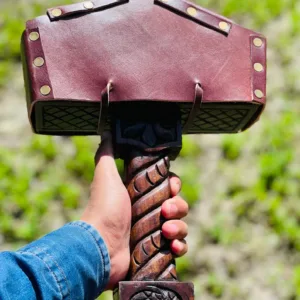

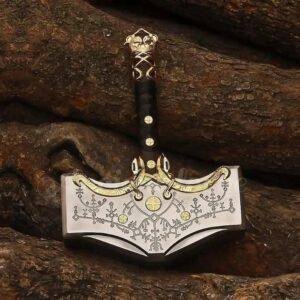
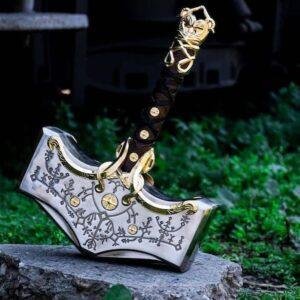
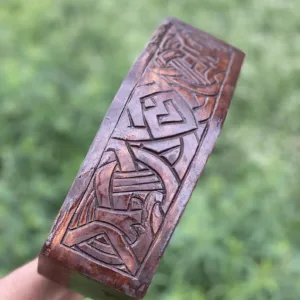
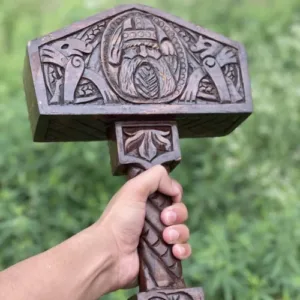
Design and Construction of the Norse Battle Hammer
Viking war hammers were purpose-built instruments. Unlike the ceremonial Mjölnir amulets, battlefield hammer weapons were engineered for one thing: delivering maximum force to a target with precision and control.
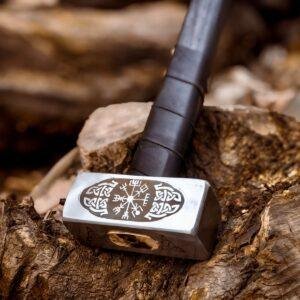
The head of a Viking battle hammer was typically forged from iron or steel, with a relatively compact striking face designed to concentrate force into a small area. This geometry — unlike a broad axe blade — was specifically effective against armor, channeling impact energy through even thick metal rather than being deflected by it. Many historical Viking hammer heads also featured a rear spike or pointed poll, making the weapon effective for both blunt crushing strikes and armor-piercing thrusts.
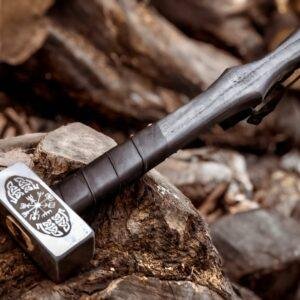
The haft, or handle, was constructed from dense hardwoods — ash and oak being the most common choices across the Norse and medieval periods. Haft length varied considerably depending on whether the hammer was designed for one-handed or two-handed use. One-handed viking hammers typically featured shorter hafts of 40 to 60 centimeters, optimized for speed and use alongside a shield. Two-handed war hammers used longer hafts of 100 centimeters or more, trading agility for devastating leverage and striking power.
Head-to-haft attachment was critical. Viking smiths used wedged tangs and iron collars to ensure the head remained firmly seated under repeated impact — a loose hammer head in battle was as dangerous to the wielder as to the opponent. This attention to functional construction is one reason genuine historical warhammers are so valued by serious collectors today.
How Viking Warriors Used the Battle Hammer
Understanding how the viking war hammer was actually used in combat requires understanding the broader context of Norse and early medieval warfare. Viking battles were rarely the cinematic chaos of popular imagination. Shield walls, coordinated unit tactics, and calculated weapon choices were all features of Norse military engagements.
In this context, the battle hammer served specific tactical functions. Against unarmored opponents, a war hammer strike was immediately and overwhelmingly effective — blunt trauma requiring no cutting edge to be lethal. Against armored opponents, the hammer’s physics were equally decisive: even without penetrating armor, a heavy blow from a medieval war hammer could fracture bones through metal, displace helmet plates enough to cause serious head injury, and disorient opponents sufficiently to create openings for follow-up strikes.
The one-handed viking hammer was particularly well suited to shield-wall combat, where space was limited and weapons needed to be used in tight quarters. Warriors could strike downward or laterally with the hammer while keeping their shield raised, maintaining defensive integrity without sacrificing offensive capability.
Two-handed warhammers became increasingly prominent in later medieval periods as plate armor became more sophisticated. By the 14th and 15th centuries, the two-handed war hammer was among the most feared weapons on any European battlefield — and its Norse ancestry was unmistakable.
The Viking Hammer vs. Other Medieval Weapons
How does the viking war hammer compare to other medieval and Norse weapons in practical terms?
Against swords, the battle hammer had a clear advantage against armored opponents. Sword edges could be deflected or dulled by plate and heavy mail; the war hammer’s blunt force was not diminished by surface hardness. Against axes, the hammer sacrificed cutting capability but gained reliability against armor and psychological impact — a hammer blow that doesn’t penetrate still transfers tremendous force. Against spears and pole weapons, the war hammer was at a disadvantage at range but devastating in close quarters.
This is why historically, war hammers were often carried as secondary or complementary weapons alongside swords or axes. A Norse warrior might engage at range with a spear, close the distance behind a shield, and then transition to a one-handed viking hammer for close-quarters fighting. The battle hammer was the weapon of final, decisive violence.
Viking Hammer Variants Through History
Several distinct viking and medieval war hammer types are particularly significant for collectors and enthusiasts:
The English War Hammer — Developed through the 14th and 15th centuries, the English warhammer was characterized by a long rear spike (the beak or fluke) opposite the striking face, making it effective as both a crushing and piercing weapon against plate armor. A staple of the later medieval battlefield.
The German Warhammer — German and Holy Roman Empire smiths produced some of the most technically refined warhammers of the medieval period, often featuring ornate head designs alongside fully functional construction. German warhammers are among the most collected historical weapons today.
The Polish War Hammer (Nadziak) — The Polish warhammer, known as the nadziak, was a specialized cavalry weapon featuring a long pick-like beak optimized for penetrating armor from horseback. Relatively rare and highly distinctive in form.
The Lucerne Hammer — Technically a pole weapon, the Lucerne hammer mounted a war hammer head atop a long staff, combining the reach of a polearm with the anti-armor effectiveness of a warhammer. Used extensively by Swiss and German infantry in the 14th and 15th centuries.
Why Viking Hammers Captivate Collectors Today
The appeal of the viking war hammer to modern collectors runs deeper than aesthetics alone. These weapons sit at the intersection of extraordinary craftsmanship, genuine historical significance, and one of the most compelling mythological traditions in human history. Owning a real war hammer — one built with authentic materials, correct proportions, and honest construction — is owning a tangible connection to a world where these objects shaped the outcome of battles and the course of civilizations.
For Norse mythology enthusiasts, the hammer carries the full symbolic weight of Mjölnir — strength, protection, and divine power made physical. For historical re-enactors, a battle-ready viking war hammer is an essential piece of an authentic kit. For serious collectors, a well-crafted medieval warhammer is both a display centerpiece and a functional artifact worthy of long-term investment.
If you’re ready to explore authentic Viking hammers and medieval war hammers built for collectors who take quality seriously, browse the full collection at Orion Krafts — where every hammer weapon is chosen for historical accuracy, material quality, and lasting craftsmanship.

Add comment