
Claymore Swords
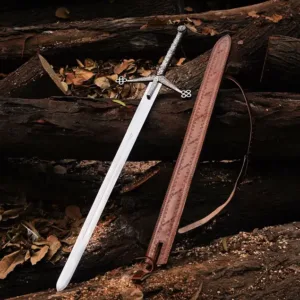
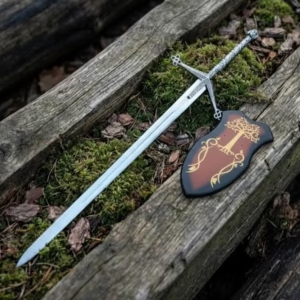
Forged in the spirit of the Scottish Highlands, the Claymore is one of history’s most formidable two-handed swords. Our handcrafted Claymore sword replicas are built to authentic dimensions and weight, delivering true balance whether you’re displaying them at home, showcasing them in your office, or wielding them in medieval reenactments. Each piece is a faithful reproduction — not just a wall decoration, but a sword worth holding.

Claymore Swords in Scottish History & Culture
The claymore is inseparable from Scottish national identity. Scottish weapons tell the story of a people who fought — often against overwhelming odds — for their land, their clans, and their freedom.
Highland Warriors & Clan Warfare From clan skirmishes to full-scale battles, the claymore was the weapon of choice across the Scottish Highlands. Its intimidating size gave Highland warriors a psychological edge as much as a physical one.
Gaelic Swords & Celtic Heritage The claymore descends from a broader tradition of Gaelic swords rooted in Celtic warrior culture. Celt swords of the Iron Age laid the foundation for the blade traditions that would eventually produce the claymore.
Swords of Scotland in Film & Fiction The claymore captured the popular imagination through characters like Connor MacLeod of Highlander fame — the Connor MacLeod Highlander sword remains one of the most searched historical replicas in the world. Scotland armor and Highland warfare have inspired countless films, novels, and games, keeping the claymore's legend alive for new generations.
Claymore in Anime & Gaming The claymore has crossed into pop culture in a big way. Claymore the manga and anime series features warriors wielding enormous blades in a dark fantasy world — Claymores manga has become a collector's touchstone. In gaming, the Claymore Elden Ring weapon is one of the most beloved greatswords in FromSoftware's catalogue, beloved for its reach, damage, and distinctive moveset. The claymore anime sword aesthetic has introduced an entirely new generation to the historical weapon behind the fantasy icon.
Claymore Sword Care & Maintenance
Owning a quality sword comes with responsibility. Proper care ensures your claymore stays sharp, rust-free, and display-ready for decades.
Cleaning Wipe blades with a dry cloth after handling. Skin oils cause rust over time. For deeper cleaning, use a lightly oiled cloth with mineral oil or dedicated blade oil.
Sharpening For functional blades, use a sharpening stone or whetstone to maintain the edge. The same technique used for how to sharpen a knife on a whetstone applies to sword blades — consistent angle, light pressure, full-blade strokes. A knife sharpener kit with multiple grit stones handles everything from reprofiling a damaged edge to polishing a working edge. Professional sharpening services are available for high-value pieces.
Storage & Display Store horizontally or on a purpose-built sword stand. Avoid sheaths that trap moisture. For long-term storage, wrap in a lightly oiled cloth or acid-free fabric.
Claymore Swords for Cosplay & Display
Not every claymore buyer is a reenactor or collector. Many of our customers are:
- Cosplayers looking for accurate, lightweight cosplay swords that photograph beautifully
- Prop builders needing screen-accurate historical replicas
- Home decorators using statement weapons as wall art and conversation pieces
- Gift buyers searching for something genuinely unique for the history lover in their life
We carry options across the full spectrum — from display-grade decorative pieces to fully battle-ready functional swords — so you can find exactly what your purpose demands.
Frequently Asked Questions About Claymore Swords
What does "claymore" mean? Claymore comes from the Scottish Gaelic claidheamh mòr, meaning "great sword." It was first used to describe the large two-handed broadsword of the Scottish Highlands, and later applied to the basket-hilted sword of the 18th century.
How long is a claymore sword? The average claymore sword length is approximately 55 inches (140 cm), though examples range from 50 to 60 inches depending on the specific type and period.
How heavy is a claymore sword? Historical claymores typically weighed between 5 and 8 lbs (2.3–3.6 kg). Despite their size, they were designed to be wielded effectively in two hands by a trained warrior.
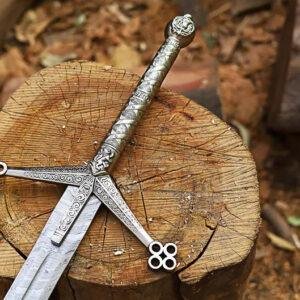
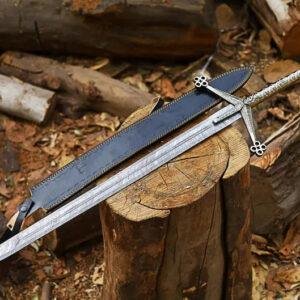
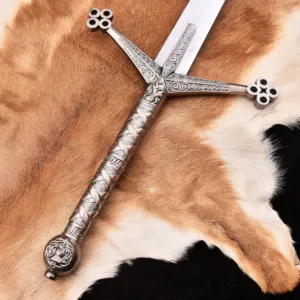
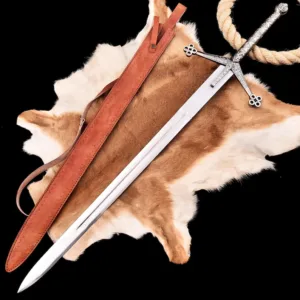
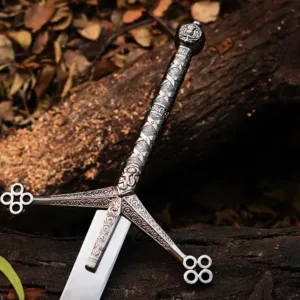
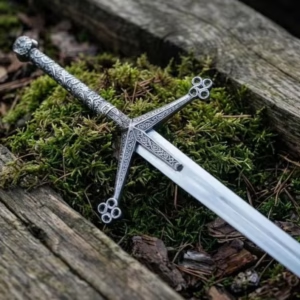
What is the difference between a claymore and a greatsword? A claymore is a specific type of greatsword with distinctly Scottish design features — particularly the downward-sloping cross-guard with quatrefoil terminals. Not all greatswords are claymores, but all claymores are greatswords.
What is the difference between a claymore and a zweihander? The zweihander is a German two-handed sword used by Landsknecht mercenaries, typically longer and heavier than a claymore, with different guard geometry and cultural origins. The claymore is specifically Scottish in design and heritage.
Are your claymores battle-ready? Yes — our battle-ready claymores are built from high-carbon steel with full tang construction and historically accurate dimensions. They are suitable for stage combat, medieval reenactments, and HEMA training, not just display.
Can I use a claymore for cosplay? Absolutely. We carry lighter display and cosplay variants alongside our functional swords. Check individual product listings for material and weight specifications.
What is the M18 Claymore mine — is it related to the sword? The M18 Claymore mine is a directional anti-personnel mine used by military forces, named after the Scottish sword for its cutting power. It shares nothing beyond the name with the historical Highland weapon.
How do I care for my claymore sword? Wipe down after handling, apply a light coat of mineral oil periodically, store in a dry environment, and sharpen functional edges with a whetstone when needed. Avoid storing in leather sheaths long-term as they can trap moisture.
Where can I buy an authentic claymore sword? Right here. Our collection features hand-crafted, historically accurate claymore replicas built to authentic specifications — browse the products below to find the right sword for your collection, display, or reenactment needs.