Spear
The Viking spear was the most widely carried weapon of the Norse Age — deadlier in battle than the sword, cheaper to forge, and iconic in the hands of every warrior from coastal raiders to Norse chieftains. Our hand-forged Viking spear replicas are built to historically accurate dimensions and steel specifications — whether you need a battle-ready Norse spear for reenactment, a display piece for your wall, or an authentic replica for LARP and cosplay. Every spearhead in our collection is crafted to match the real thing — not just in looks, but in balance, weight, and feel.


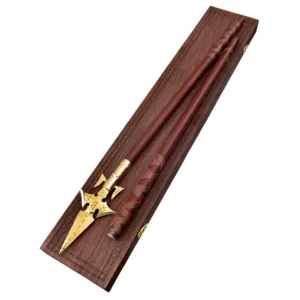
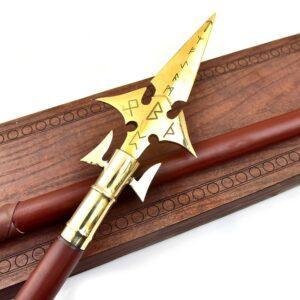
The Viking Spear — Weapon of the Norse World
When most people picture Viking warriors, they think of axes and swords. But history tells a different story. The Viking spear was the most common weapon of the entire Viking Age — carried by warriors of every rank, from the humblest farmer-soldier to the most celebrated Norse chieftain. Requiring far less iron than a sword and far more versatile on the battlefield, the spear was the true weapon of the Norse world.
The Old Norse name for spear was spjót — a word that appears throughout the Eddic poems and saga literature as a symbol of war, fate, and divine power. To carry a spear was to carry the weapon of Odin himself.
What Kind of Spear Did the Vikings Use?
Viking spears were not a single weapon but a family of purpose-built tools of war, each designed for a specific role on the battlefield.
Throwing Spear (Fleinn / Javelin) Lighter and shorter, designed to be hurled at the enemy before close combat began. Vikings would open engagements with volleys of thrown spears to disrupt shield walls before charging.
Thrusting Spear (Spjót) The standard infantry spear — long-shafted, with a leaf-shaped or angular blade designed for thrusting through gaps in shields and armour. This is the most documented form in archaeological finds.
Hewing Spear (Höggspjót) A heavier, broader-bladed variant with a cutting edge designed not just to thrust but to hack and slash. Effectively a bladed polearm, it blurred the line between spear and axe.
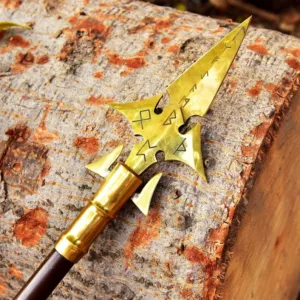
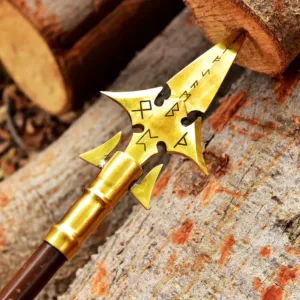
Lugged Spear Distinguished by projecting lateral wings or lugs at the base of the blade — these prevented over-penetration in battle and could be used to hook and pull an opponent's shield. Highly sought after by reenactors for their authenticity and functionality.
Winged Spear A close relative of the lugged spear, featuring pronounced angular wings. Common in Frankish and Norse contexts and frequently depicted in period artwork.
Viking Spear Types — Sizes & Specifications
How big were Viking spears? Archaeological evidence and saga descriptions give us a clear picture:
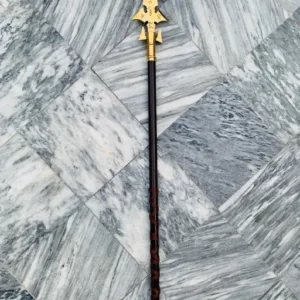
- Total length: 6 to 10 feet (180–300 cm) for thrusting spears; shorter for throwing variants
- Spearhead length: 7 to 24 inches (18–60 cm) depending on type
- Shaft material: Ash wood — chosen for its strength, flexibility, and availability across Scandinavia
- Spearhead material: Hand-forged iron or steel, often pattern-welded on higher-status weapons
- Weight: 2 to 5 lbs depending on head size and shaft length
The viking spear length gave Norse warriors a critical reach advantage in shield wall combat — keeping the enemy at distance while delivering lethal thrusting power.
What Is Odin's Spear? The Legend of Gungnir
No discussion of Viking spears is complete without Gungnir — the legendary spear of Odin, the Allfather. In Norse mythology, Gungnir was forged by the dwarven craftsmen known as the Sons of Ivaldi and gifted to Odin, who carried it as his primary weapon and symbol of divine authority.
The Norse legendary spear Gungnir was said to never miss its mark. Odin hurled it over the heads of enemies to consecrate them before battle — a ritual that gave the victors divine sanction. "Odin owns you all" was the meaning of that throw.
Gungnir appears throughout the Elder Edda and the Prose Edda, cementing the spear's place not just as a weapon but as a sacred symbol of Norse cosmology. Our Gungnir replica spears capture this mythological legacy in hand-crafted steel and ash wood.
What Was the Deadliest Viking Weapon?
While the sword carried the most prestige in Norse culture, the Viking spear was deadlier in practical battlefield terms for several reasons:
- Reach — A spear-armed warrior could strike before a sword-wielder got close
- Versatility — Could thrust, throw, sweep, and hook in ways a sword could not
- Shield wall dominance — In the tight formations of Norse shield wall combat, the spear was the primary offensive weapon, used to probe and penetrate gaps
- Cost — Swords required skilled bladesmiths and significant iron. Spears could be forged quickly, meaning more warriors carried them
Saga literature confirms this. The great Viking battles — Stamford Bridge, Clontarf, Stiklestad — were decided largely by spear-armed infantry, not sword-wielding heroes.
Viking Spear Names — What Did the Norse Call Their Spears?
The Vikings had a rich vocabulary for their spears, reflecting how central the weapon was to their culture:
- Spjót — General Old Norse term for spear
- Fleinn — A dart or light throwing spear
- Kesja — A type of halberd-like polearm used in the later Viking Age
- Atgeirr — A legendary spear type referenced in the sagas, sometimes translated as "hewing spear"
- Gungnir — Odin's mythological spear, the most famous named weapon in Norse mythology
Understanding these names helps collectors and reenactors identify which viking spear type they're looking for — and which piece belongs in their collection.
Authentic Viking Spear Replicas — What to Look For
A quality viking spear replica is defined by the same principles as any serious historical weapon reproduction:
Spearhead Steel High-carbon steel (1075, 1080, or hand-forged wrought iron for maximum authenticity) is the standard for functional replicas. Stainless steel looks clean on a shelf but is inappropriate for reenactment or combat use.
Socket Construction Authentic Viking spearheads are socketed — the shaft fits inside a hollow cone at the base of the head, secured by a rivet or pin. This is historically accurate and structurally superior to tang-mounted heads.
Shaft Material Ash wood is the historical standard. Straight-grained, kiln-dried ash delivers the correct weight, flex, and feel. Some modern replicas use hickory as a functional substitute.
Blade Geometry Each viking spear type has a distinct blade profile. A hewing spear should have a broad, angular blade. A throwing spear should be narrow and light. A lugged spear must have properly formed wings. Details matter — and our replicas get them right.
Battle-Ready Construction Our battle-ready viking spears feature properly fitted sockets, riveted shafts, and correctly tempered blades. They are built to withstand the demands of reenactment combat — not just look impressive on a wall.
Viking Spears in Combat — How Did Vikings Fight With Spears?
Viking spear combat was sophisticated and well-documented in the sagas. Key techniques included:
Shield Wall Thrusting In the classic Norse skjaldborg (shield wall), spearmen thrust through gaps between shields, targeting exposed legs, faces, and arms. Reach and angle were everything.
The Thrown Opening Before shield walls clashed, warriors hurled spears overhead into the opposing formation — both to cause casualties and, in Odin's tradition, to consecrate the enemy to the Allfather.
Hooking & Pulling Lugged and winged spears were used to hook an opponent's shield edge and pull it aside, exposing them to a follow-up thrust or a comrade's blow.
One-on-One Combat Saga duels (hólmganga) frequently feature spear play — warriors using the shaft to parry, the head to thrust, and the butt spike to strike in close quarters.
Viking Spears for Reenactment, LARP & Display
Whatever your purpose, we have the right spear for you:
Medieval Reenactment Our battle-ready Norse spears meet the specifications demanded by serious historical reenactment groups — correct materials, accurate dimensions, functional construction.
LARP (Live Action Role Play) We carry lighter, blunted, and foam-tipped variants suitable for LARP combat where safety is the priority alongside authenticity of appearance.
Display & Collecting Wall-mounted Viking spears make extraordinary display pieces — historically significant, visually dramatic, and a conversation starter in any room. Our display pieces feature the same authentic proportions as our functional weapons.
Viking Spear Tattoo Reference & Art The distinctive silhouette of the Norse spearhead — particularly the winged and lugged variants — has become iconic in Viking tattoo art and illustration. Our replica photography and detailed product images are used by artists worldwide as reference material for viking spear drawing and viking spear tattoo designs.
Want to learn how traditional Norse spearheads were forged and constructed? Read our detailed guide on Viking spear making, historical techniques, and craftsmanship to explore the materials, blacksmithing methods, and construction techniques behind authentic Norse spears.FREQUENTLY ASKED QUESTIONS
What kind of spear did the Vikings use? Vikings used several spear types including the standard thrusting spear (spjót), lighter throwing spears (fleinn), broad-bladed hewing spears, and lugged or winged spears with lateral projections at the blade base. Each served a different battlefield role.
What is the Old Norse name for spear? The primary Old Norse word for spear is spjót. Other terms include fleinn (dart/throwing spear), kesja (polearm), and atgeirr (hewing spear). Odin's legendary spear is called Gungnir.
What spear did Odin use? Odin's spear is called Gungnir, forged by the Sons of Ivaldi — the greatest craftsmen in Norse mythology. It was said to never miss its target and was hurled over enemies before battle to consecrate them to Odin.
What is the Norse legendary spear? Gungnir is the most famous Norse legendary spear, belonging to Odin. Other legendary spears appear throughout the sagas, including the atgeirr wielded by various saga heroes.
How big were Viking spears? Viking thrusting spears typically measured 6 to 10 feet (180–300 cm) in total length, with spearheads ranging from 7 to 24 inches. Throwing spears were shorter and lighter for aerodynamic performance.
What was the deadliest Viking weapon? In practical battlefield terms, the spear was the deadliest Viking weapon due to its reach, versatility, and dominance in shield wall combat. Swords held greater cultural prestige, but spears won more battles.
What weapon did most Vikings use? The spear was by far the most common Viking weapon, carried by the majority of Norse warriors. Axes were also widespread. Swords were expensive and associated with higher-status warriors.
Did Vikings use spears in battle? Absolutely. Viking spears were the primary weapon of Norse infantry. They were used for thrusting in shield wall formations, thrown as opening volleys, and wielded in single combat throughout the Viking Age.
What are the different types of Norse spears? The main types are: thrusting spear (spjót), throwing spear (fleinn), hewing spear (höggspjót), lugged spear, and winged spear. Each has distinct blade geometry and battlefield application.
What are other names for a spear? Across cultures, spears are called lance, javelin, pike, halberd, polearm, and partisan. In Old Norse specifically: spjót, fleinn, kesja, atgeirr. The Greek term is dory; the Spartan spear is called a doru.
What is a knight's spear called? A mounted knight's spear is called a lance — heavier and longer than an infantry spear, designed for couched cavalry charges rather than throwing or thrusting on foot.
How long is the average Viking spear replica? Our replicas follow historical specifications — typically 6 to 8 feet total length for thrusting spear reproductions, with shorter options available for display and LARP use.
Are your Viking spears battle-ready? Yes. Our battle-ready Viking spears are constructed with high-carbon steel heads, properly socketed and riveted ash wood shafts, and are suitable for historical reenactment combat. Always check individual product listings for specific use-case ratings.